본문
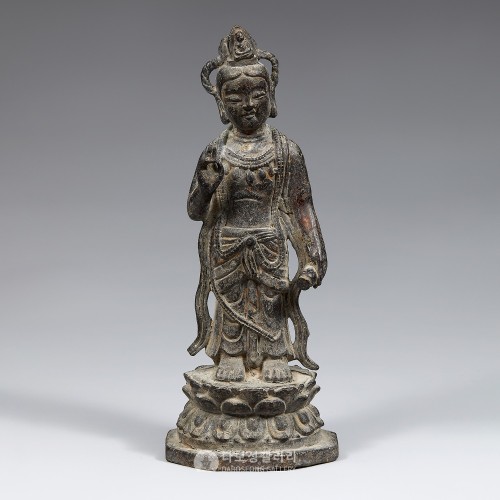
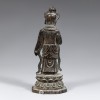
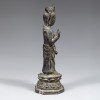
통일신라시대에 제작된 금동 관음보살 입상입니다. 관음보살은 중생을 고통에서 구제해주는 보살로, 중생의 바람에 따라 다양한 모습으로 표현되었습니다.
머리에는 작은 화불(化佛)이 새겨진 보관(寶冠)을 쓰고 있습니다. 얼굴은 둥글고 넓적하며, 눈·코·입은 도톰하게 표현되었습니다. 입가에는 은은한 미소가 더해져 온화한 인상을 줍니다. 고개를 오른쪽으로 살짝 기울이고 있고 몸에 비해 얼굴 비례가 큰 편입니다. 목에는 삼도가 표현되어 있습니다.
천의(天衣)는 어깨에 둘러 양쪽으로 팔을 따라 흘러내립니다. 영락(瓔珞)은 가슴과 허리, 몸을 감싸며 허리까지 길게 늘어져 교차하는 형태입니다. 오른손은 허리 높이까지 들어 올려 수인을 취하고, 왼손은 아래로 굽혀 정병(淨甁)을 쥐고 있습니다. 천의 자락과 영락, 옷주름 등의 높낮이와 굴곡이 달라 동적인 인상을 줍니다.
통일신라시대 불상은 인체 표현 자체에 대한 관심이 늘어나며 점차 신체 노출이 증가하고 양감이 강조됩니다. 이 유물 또한 탄력성 있는 육체미를 표현하였으며 상체를 드러낸 모습입니다.
대좌는 연꽃이 위를 향하는 앙련(仰蓮)과 아래를 향하는 복련(覆蓮)이 합쳐진 형태입니다.
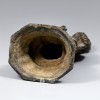
속을 비운 방식으로 주물하였으며, 표면에는 도금 흔적이 남아 있으나 대부분 탈락한 상태입니다. 제련, 합금, 주물, 도금 등 고도의 숙련도가 요구되는 유물로, 당시의 주조 수준을 보여줍니다.
━━━━━
此为统一新罗时期制作的鎏金铜观音菩萨立像。观音菩萨是救度众生脱离苦难的菩萨,会依众生的愿望而显现出不同的形象。
菩萨头戴宝冠,冠中央饰有一尊小型化佛。面部轮廓圆润而宽阔,眼、鼻、口刻画饱满,唇边带有淡淡的微笑,呈现出温和慈祥的神情。头部微微向右倾斜,面部比例相对较大,颈部刻有三道纹饰。
天衣披搭于双肩,自两侧沿手臂自然垂落。璎珞环绕胸部、腰部与身体,并自腰间向下延伸,呈交叉垂挂之态。右手抬至腰部高度结印,左手下垂,持净瓶。天衣衣缘、璎珞与衣纹在高低起伏与曲线变化上富于层次,使整体造型呈现出动感。
统一新罗时期的佛像对人体结构的关注明显增强,身体裸露程度逐渐增加,强调体量感与立体感。本像亦表现出富有弹性的肉体美,上身呈现裸露状态。
台座为仰莲与覆莲相结合的莲花座形式。
本像采用中空铸造法制作,表面尚残留鎏金痕迹,但大部分已剥落。其制作过程涵盖冶炼、合金、铸造与鎏金等多项高难度工艺,充分体现了当时高超的金属铸造技术水平。
━━━━━
This is a Gilt-bronze Standing Avalokitesvara Bodhisattva produced during the Unified Silla period. Avalokitesvara is a bodhisattva who saves sentient beings from suffering and has been depicted in various forms according to their wishes.
The figure wears a jeweled crown engraved with a small transformation Buddha. The face is round and broad, with plump eyes, nose, and mouth. A subtle smile plays on the lips, creating a gentle impression. The head is slightly tilted to the right, and the face is relatively large in proportion to the body. The three aesthetic lines are depicted on the neck.
The celestial robe drapes over the shoulders and flows down along both arms. The beaded necklace ornament wraps around the chest, waist, and body, hanging long down to the waist where it crosses. The right hand is raised to waist height performing a mudra, while the left hand is bent downward holding a purification vase. The varying heights and undulations of the robe hems, ornaments, and folds create a dynamic impression.
Buddhist statues from the Unified Silla period reflect a growing interest in the representation of the human body, characterized by increased physical exposure and emphasized volume. This artifact also expresses a resilient physical beauty with a revealed upper body.
The pedestal is formed by combining upward-facing lotus petals and downward-facing lotus petals.
The statue was cast using a hollow method. Traces of gilding remain on the surface, though most have worn away. This artifact required a high degree of skill in smelting, alloying, casting, and gilding, demonstrating the advanced casting standards of the time.