본문
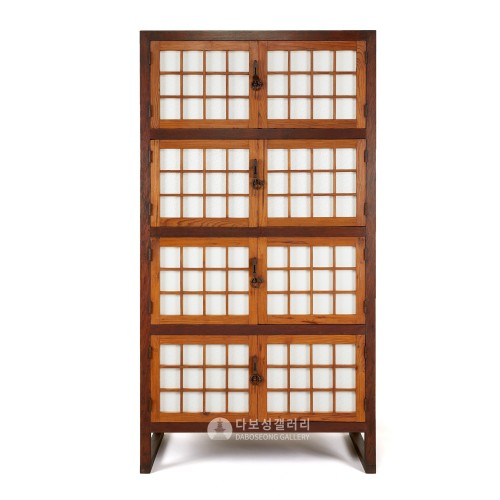
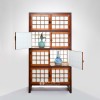
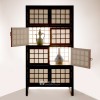
조선시대에 제작된 지장 사층 책장입니다. 서책을 넣어 보관하는 목기로, 나무 골재에 장지를 발라 마감한 목골지장(木骨紙欌) 형식입니다. 조선시대에는 ‘책장’이라는 명칭이 왕실에서 사용되었으며, 민간에서는 주로 서주(書廚) 또는 서장(書欌)이라 불렸습니다.
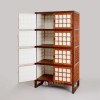
각 층마다 양쪽으로 여닫이문을 두었으며, 문을 열면 별도의 구획 없이 내부 공간이 드러납니다. 문짝은 경첩으로 기둥과 연결되어 있으며, 잠금 장치를 걸 수 있는 구조입니다. 잠금 장치와 열쇠는 무쇠 주조를 바탕으로 일부 단조 및 절삭 가공을 더해 정교하게 제작된 것으로 보입니다. 층마다 3×4칸 살을 짠 합문을 두어 내부가 은은하게 비치도록 하였습니다. 종이를 이용한 마감은 통풍과 습도 조절에 유리합니다. 당시 책장은 2층에서 4층까지 다양한 형태가 제작되었으며, 4층 구조는 상대적으로 드문 형식에 속합니다.
기둥과 판은 참나무, 창살은 소나무로 제작되었습니다. 목재는 제작 전에 소금물에 삶거나 찌는 과정을 거쳐 수분과 수지를 제거하였으며, 뒤틀림과 갈라짐을 예방하였습니다. 보존 상태는 양호한 편입니다. 이러한 제작 수준으로 보아 왕실 또는 상류층에서 사용된 것으로 추정됩니다.
━━━━━
此为朝鲜时期制作的纸糊四层书柜。作为存放书籍的木制家具,属于在木质骨架上糊纸加以收尾的木骨纸柜形式。朝鲜时期,“册柜”(即书柜)这一名称多用于王室,而在民间则多称为“书橱”或“书藏”。
每一层两侧均设有对开门,打开柜门后内部为无分隔的空间结构。门扇通过合页与立柱连接,并设有可上锁的装置,锁具和钥匙是在铸铁铸造的基础上,辅以部分锻造及切削加工,精细制作而成。各层门面采用3×4格的格栅式合门,使内部空间若隐若现。以纸张进行表面处理,有利于通风及湿度调节。当时书柜有2层至4层等多种形制,其中4层结构相对较为少见。
立柱与板材采用橡木制作,窗棂则使用松木。木材在制作前经过盐水煮或蒸的处理,以去除水分和树脂,从而防止变形与开裂。整体保存状况良好。从其制作工艺水平来看,推测为王室或上层阶级所使用。
━━━━━
This is a A Jangji 4-layered bookshelf with door produced during the Joseon dynasty. It is a wooden storage furniture for books, constructed in the mokgol jijang format, in which a wooden frame is finished with layers of paper. During the Joseon period, the term “chaekjang” was used in the royal court, while in private households it was commonly referred to as seoju or seojang.
Each tier is fitted with double doors on both sides, revealing an undivided interior space when opened. The doors are connected to the frame with hinges and are designed to accommodate a locking mechanism. The lock and key appear to have been finely crafted, based on cast iron production with additional forging and cutting processes. Each level features lattice-panel doors arranged in a 3×4 grid, allowing the interior to be softly visible. The paper finish aids in ventilation and humidity control. Cabinets of this type were produced in various forms ranging from two to four tiers, with four-tier examples being relatively rare.
The pillars and panels are made of oak, while the latticework is crafted from pine. Prior to construction, the wood was boiled or steamed in saltwater to remove moisture and resin, helping to prevent warping and cracking. The overall condition is well preserved. Based on the level of craftsmanship, it is considered to have been used by the royal court or the upper class.