본문
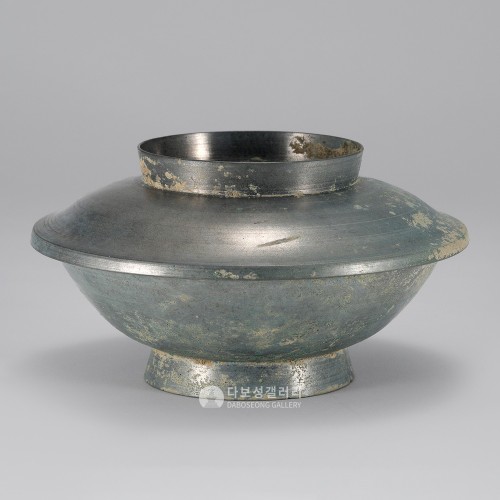
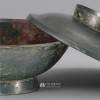
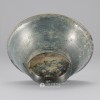
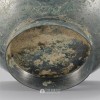
청동으로 만든 삼국시대의 합(盒)입니다. 합(盒)은 운두가 그리 높지 않고 둥글넓적하며, 위에 뚜껑이 있는 그릇을 말합니다. 불가에서는 공양물을 올리기 위한 공양구(供養具)로 쓰였습니다. 이 유물은 굽다리와 발우형의 몸체, 뚜껑으로 구성되어 있으며, 뚜껑에는 손잡이가 없고 가운데 둥그런 테가 붙어 있습니다. 장기간 매장되어 형성된 녹 흔적이 군데군데 보이지만, 광택이 있고 보존 상태가 좋습니다.
청동합은 동과 주석을 정확한 비율로 합금한 후 두드려 만든 방짜합과, 황동이나 그 밖의 금속을 섞어 녹인 뒤 틀에 부어 대량으로 생산해 낸 주물합으로 나뉘는데, 이 청동합은 주물로 만든 것입니다. 주물은 정제된 형태와 균질한 두께를 구현할 수 있습니다. 이 유물 또한 두께와 형태가 일정하며, 몸체와 뚜껑이 정확하게 맞물리는 점에서 주물 기법의 높은 완성도가 잘 드러납니다.
발우형의 몸체에 굽다리가 있고 뚜껑을 갖춘 구성과 청동으로 제작된 점 등을 종합할 때, 왕족이나 귀족을 위한 의례용 유물로 추정됩니다. 이와 유사한 형태의 청동합이 국립경주박물관과 국립중앙박물관에도 소장되어 있으나, 이처럼 몸체와 뚜껑이 한 쌍으로 온전히 남아 있고 보존 상태 또한 우수한 사례는 드뭅니다.

━━━━━
此器为三国时代以青铜铸造的盒。所谓“盒”,是指口沿不高、器身扁圆、并配有盖的容器。在佛教中,多作为盛放供养物的供养具使用。此件青铜盒由高足、钵形器身与盖组成。器盖无钮,中央饰有一圈隆起的圆形棱缘。因长期埋藏,器表局部可见铜锈痕迹,但整体仍保有光泽,保存状况良好。
青铜盒按制作工艺大致可分为两类:一类为将铜与锡按一定比例合金后反复锤打而成的锻造盒,另一类则是在熔融状态下掺入黄铜或其他金属,倒入模具中铸造成型的铸造盒。本件属于后者。铸造工艺能够实现形制规整、厚度均匀的效果,此器在器壁厚薄、整体造型及器身与盖严密契合等方面,充分体现了高度成熟的铸造技术。
综合其钵形器身、带高足并配有盖的结构特征,以及以青铜制作的材质判断,本器应为供王族或贵族使用的礼仪器物。与之形制相近的青铜盒现藏于国立庆州博物馆及国立中央博物馆,但如本件一般器身与器盖成对完整保存且状态如此良好的实例,实属罕见。
━━━━━
This is a bronze lidded bowl dating to the Three Kingdoms period. A lidded bowl is a flat, circular vessel with low sides and a lid. In Buddhist contexts, it served as an offertory vessel for presenting offerings. This artifact consists of a footed, bowl-shaped body and a lid. The lid is designed without a knob, featuring instead a raised circular ridge in the center. Although there are scattered traces of patination from prolonged burial, the surface retains a lustrous sheen, and the piece is in excellent condition.
Bronze bowls are generally classified into two types: hand-forged, made by hammering a precise alloy of copper and tin, and cast, produced by pouring molten brass or other metals into a mold. This piece was crafted using the casting technique. Casting allows for the realization of refined forms and uniform thickness. This artifact exemplifies the high level of sophistication in casting technology, demonstrated by its consistent thickness, balanced shape, and the precise articulation between the body and the lid.
Given its composition—a bowl-shaped body mounted on a foot and fitted with a lid—and its bronze construction, it is presumed to have been a ritual vessel intended for royalty or the aristocracy. While similar bronze lidded bowls are held in the collections of the Gyeongju National Museum and the National Museum of Korea, it is rare to find an extant example where the body and lid have survived together as a complete pair in such a remarkable state of preservation.