본문
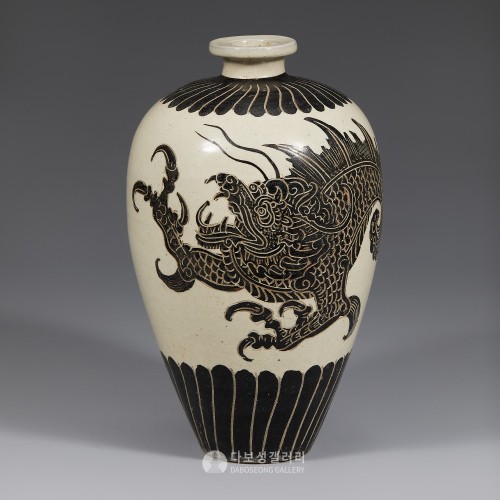
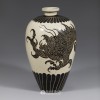
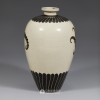
북송시대 자주요(磁州窯)에서 제작된 용문 매병입니다. 넓은 구연과 가는 목, 팽만한 어깨, 풍만한 몸체를 갖추었으며, 아래로 갈수록 좁아지는 형태입니다.
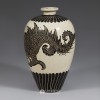
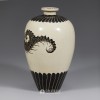
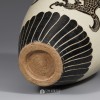
어깨와 저부에는 사선의 꽃잎 문양을 둘렀으며, 몸체에는 한 마리의 용을 크게 시문하였습니다. 용은 입을 벌리고 발톱을 치켜세운 채 비상하는 모습으로 표현되었습니다. 섬세하게 새긴 비늘과 휘날리는 갈기는 역동적인 생명력을 돋보이게 합니다.
태토 위에 백색 화장토를 입힌 뒤 흑색 철유를 바르고, 문양을 따라 유약층을 긁어냈습니다. 이후 투명유를 입혀 소성함으로써 흰 바탕과 검은 문양이 선명한 대비를 이루며 서예와 회화를 연상시키는 독특한 미감을 보여줍니다.
중국 도자기의 회화적 표현에 새로운 방향을 제시하였으며, 이후 중국 도자 양식의 발전에도 영향을 미쳤습니다. 유사한 유물이 중국 고궁박물원과 일본 하쿠쓰루미술관 등 세계 주요 박물관에 소장되어 있습니다.
This Northern Song dynasty Cizhou ware meiping vase is decorated with a dragon motif. It features a wide mouth rim, slender neck, full rounded shoulders, and a generously proportioned body that gradually narrows toward the base.
The shoulder and lower section are adorned with bands of diagonally arranged petal motifs, while the body is decorated with a large-scale dragon design. The dragon is depicted in a dynamic flying pose, with its mouth open and claws raised. The finely carved scales and flowing mane emphasize its powerful vitality and movement.
The vessel was first covered with a layer of white slip over the clay body, followed by the application of an iron-rich black slip. The decorative motifs were then carved through the dark layer, removing the surrounding black slip to reveal the white ground beneath. After the application of a transparent glaze and firing, the striking contrast between the white background and black decoration creates a distinctive aesthetic reminiscent of calligraphy and ink painting.
This white-slip black-sgraffito technique represents one of the most distinctive decorative achievements of Cizhou ware. Through its bold carved lines and harmonious black-and-white composition, the vessel demonstrates a highly expressive, painterly quality and reflects the influence of literati aesthetics in Song dynasty ceramics.
The technique introduced a new direction in the pictorial expression of Chinese ceramics and contributed to the later development of decorative styles in Chinese ceramic history. Comparable examples are preserved in major collections, including the Palace Museum in Beijing and the Hakutsuru Museum in Japan.