본문
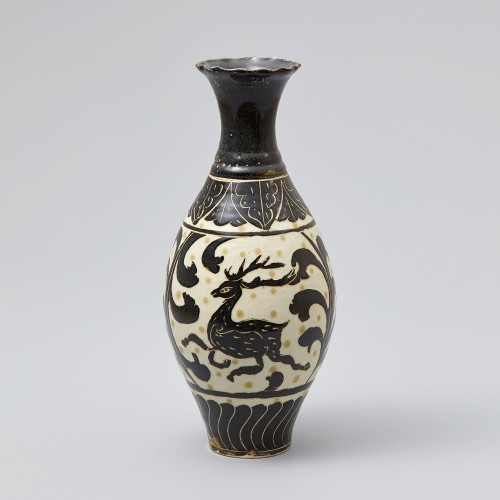
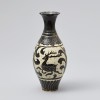
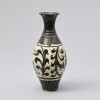
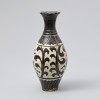
구연은 밖으로 외반한 나팔형이며, 구순은 꽃잎처럼 변형을 주었습니다. 잘록하게 내려오는 목 아래로 배가 둥글고 긴 몸통을 이룹니다. 태토 위에 백색 유약을 시유한 뒤, 흑색 안료로 채색하여 문양을 그리는 흑화 기법을 사용하였습니다. 소성 과정에서 가마 환경의 영향으로 요변 현상이 나타나 표면에 자연스러운 요철이 보입니다.
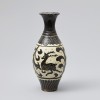
몸체의 중앙에는 뿔 달린 사슴이 내달리는 모습을 문양으로 시문하였습니다. 사슴은 예로부터 부귀와 장수 등을 상징하는 길상의 동물로 여겨졌습니다. 사슴을 뜻하는 '록(鹿)’은 '녹(禄, 관직의 녹봉)'과 음이 같아 재물과 지위를 의미합니다. 이러한 이유로 사슴 문양은 부귀와 명예, 출세의 상징으로 그려져 귀족이나 고위 계층에서 선호되었습니다.
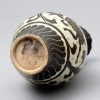
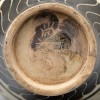
굽바닥에는 '상식국(尙食局)'이라는 관지가 새겨져 있습니다. 상식국은 북조(北朝) 시기에 등장한 황실의 음식을 담당하는 관청으로, 궁중의 식기와 관련된 물품을 관리하였습니다. 북송대에도 상식국을 설치하여 궁중의 식사를 맡게 하기도 하였습니다. 상식국 관지가 있는 이 유물은 관청의 주문에 따라 제작된 것으로 추정됩니다.
The mouth is trumpet-shaped and flares outward, with a lip modified to resemble flower petals. Below the slender neck, the body forms a round and elongated shape. The black-flower technique was used, in which the clay body was coated with white glaze and then painted with designs using black pigment. During the firing process, kiln transmutation occurred due to the kiln atmosphere, resulting in natural irregularities on the surface.
A galloping deer with antlers is depicted on the center of the body. The deer has long been regarded as an auspicious animal symbolizing wealth and longevity. The Chinese character for deer, 'lu (鹿)', is a homophone for 'lu (禄)', which means official salary, thus signifying wealth and high status. For this reason, deer patterns were favored by the aristocracy and high society as symbols of wealth, honor, and success.
The inscription 'Shangshiju (尙食局)' is engraved on the base. The Shangshiju, or Court of Imperial Food, was a government office that emerged during the Northern Dynasties to handle imperial food and manage royal tableware. The Shangshiju was also established in the Northern Song dynasty to oversee court meals. This artifact, bearing the Shangshiju inscription, is presumed to have been produced according to the bureau's order.