본문
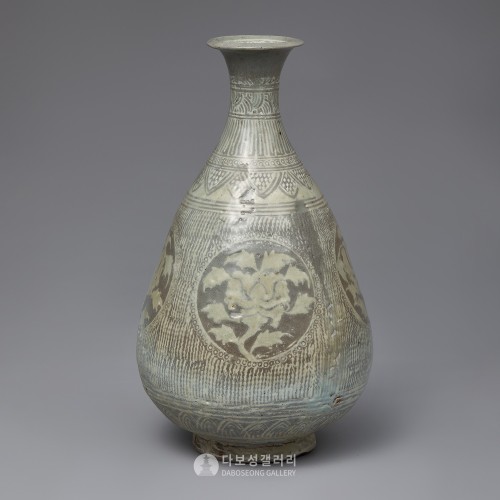
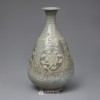
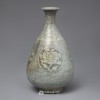
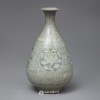
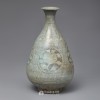
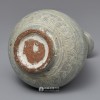
구연부가 외반되고 가는 목에서 어깨가 벌어져 풍만한 동체를 이루는 병입니다. 목에서부터 당초문(唐草紋), 파문(波紋), 선문(線紋), 원점문(圓點紋), 연판문(蓮瓣紋)을 상감하여 문양대를 구획하였습니다. 동체의 주문양대에는 원 내부에 모란절지문(牡丹折枝紋)을 면상감하고 외부에는 주름문을 인화하여 시문하였습니다. 굽을 제외한 전면에 회청색 유약을 시유하여 은은한 광택이 있습니다.
다양한 보조 문양을 겹쳐 시문한 점에서 고려 청자의 전통을 잇는 한편, 면상감과 인화 기법이 공존하는 조선 초기 도자의 특징을 보여줍니다. 고려 말기 상감청자에서 조선 초기 분청자로 이행하는 과도기적 양상을 살펴볼 수 있는 15세기 전반의 개성 있는 유물입니다.
━━━━━
器物口沿外撇,细长颈,溜肩,鼓腹。自颈部起,以缠枝纹、波纹、线纹、圆点纹、莲瓣纹等进行象嵌装饰,并以线条划分装饰区域。器腹主体纹样带中,在圆形框内以面象嵌技法装饰折枝牡丹纹,圆形框外则以印花技法饰皱褶纹。除圈足外,器物通体施灰青色釉,呈现柔和含蓄的光泽。
器物以多种辅助纹样层叠装饰,延续了高丽青瓷的传统;与此同时,面象嵌与印花技法并用,体现了朝鲜初期陶瓷的时代特征。作为一件可见高丽末期象嵌青瓷向朝鲜初期粉青沙器过渡面貌的代表性器物,其独特的装饰风格展现了15世纪前半期陶瓷的时代特征。
━━━━━
This bottle has an everted rim, a slender neck, and shoulders that widen from the neck to form a full-bodied shape. From the neck downward, bands of scroll, wave, line, circular-dot, and lotus-petal patterns were created in inlay to divide the surface into decorative bands. In the main decorative band on the body, peony sprigs within circles were rendered in broad inlay, while wrinkle patterns were stamped on the areas outside the circles. A grayish-blue glaze was applied over the entire surface except the foot, giving it a subtle luster.
The use of overlapping layers of various subsidiary motifs continues the tradition of Goryeo celadon, while the coexistence of broad inlay and stamped decoration reflects a characteristic feature of early Joseon ceramics. This distinctive vessel, dating to the first half of the fifteenth century, offers a glimpse into the transitional phase from late Goryeo inlaid celadon to early Joseon buncheong ware.