본문
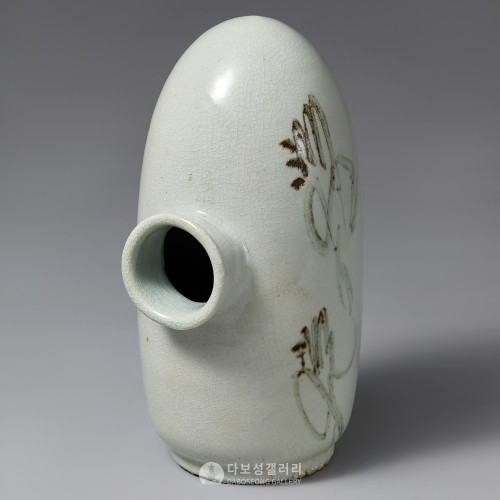
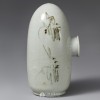
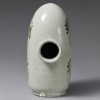
16세기 제작된 백자 장군입니다. 몸통을 가로로 눕히고 상단에 구연을 만드는 것이 일반적이나, 이 장군은 한쪽 단면을 평평하게 깎아내어 세워 놓고 사용할 수 있도록 제작되었습니다. 빙열이 있는 청백색 투명한 백자 유약이 전면에 고르게 시유되어 있습니다.
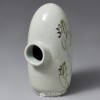
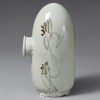
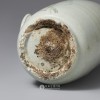
이 장군의 가장 큰 예술적 가치는 몸통 양옆에 시문된 철화 새 그림(조문, 鳥文)에 있습니다. 몸체 양면에 산화철 안료로 한 쌍의 새를 나란히 배치했습니다. 자유분방하고 간결한 선으로 그려내어 형태가 추상적이면서도, 미묘하게 다른 붓놀림과 강약의 변화가 살아있습니다. 수묵화처럼 담백한 선묘를 통해 조선 전기 철화백자의 특징을 잘 보여줍니다. 굽바닥에는 굵은 모래를 받쳐 구운 흔적이 남아있습니다.
장군은 물, 술 등의 액체를 저장하거나 운반하는 용도로 사용되었습니다. 먼 길을 갈 때 끈을 매어 하인이 등에 지는 등 여행용으로도 사용되었습니다. 조선 전기에는 분청사기나 백자로 많이 만들어졌습니다. 조선 시대 문헌인 『세종실록』, 『승정원일기』에 장군은 주병(酒甁)으로 기록되어 있으며, 『일성록』에는 "제주(祭酒)를 봉진할 때 자기 장군으로 진배하도록 하소서"라고 기록되어 있습니다. 자기 장군은 주로 제사에 쓰이는 술을 담았으며, 왕실에서도 의례용기로 사용하였음을 알 수 있습니다. 이 유물 또한 제사용·의례용 장군으로 추정됩니다.
━━━━━
此为16世纪烧造的白瓷将军瓶。一般将瓶身横置,并于上部设置瓶口,而此将军瓶则将一侧端面削平,可直立放置使用。器身通体均匀施带有冰裂纹的青白色透明白瓷釉。
此将军瓶最重要的艺术价值在于器身两侧施绘的铁绘鸟纹。器身两面以氧化铁颜料分别绘饰一对飞鸟,构图对称。纹饰以奔放而简练的笔法绘成,造型虽趋于抽象,却通过细微不同的运笔与轻重变化,展现出丰富的艺术表现力。其线描清淡自然,犹如水墨画一般,充分体现了朝鲜前期铁绘白瓷的艺术特征。圈足底部可见垫烧粗砂所留下的烧造痕迹。
将军瓶主要用于盛装或运输清水、酒等液体。远途出行时,可系绳由随从背负携带,亦常作为旅行用器。朝鲜前期,此类器物多以粉青沙器或白瓷烧制而成。朝鲜时期文献《世宗实录》《承政院日记》中,将军瓶被记载为“酒瓶”;《日省录》中则有“祭酒奉进时,请以瓷质将军瓶进献”之记载。由此可知,瓷质将军瓶主要用于盛装祭祀用酒,并作为王室礼仪用器使用。此器物亦推测用于祭祀或礼仪活动。
━━━━━
A white porcelain jar produced in the 16th century. In general, jars of this type were made with a horizontally laid body and a mouth formed at the upper part, but this example was produced so that it could be set upright, with one side of the body flattened through carving. The surface is evenly coated with a translucent bluish-white glaze with fine crackle patterns.
The greatest artistic value of this jar lies in the bird motifs painted in iron pigment on both sides of the body. A pair of birds is placed side by side on both sides of the body. The composition is rendered with free and simple brushstrokes, giving it a somewhat abstract appearance, while subtle differences in brush movement and variations in strength and delicacy remain evident. The restrained, ink-painting-like line work clearly reflects the characteristics of early Joseon iron-painted white porcelain. Traces of firing remain on the base, where the vessel was supported on a bed of coarse sand during firing.
This jar was used for storing and transporting liquids such as water or alcohol. It was also used for travel, with a rope attached so that servants could carry it on their backs when accompanying their masters on long journeys. During the early Joseon period, such vessels were commonly produced in buncheong ware or white porcelain. According to historical records such as the Veritable Records of King Sejong and the Diaries of the Royal Secretariat, the jar is recorded as a wine bottle, while the Ilseongnok records a statement requesting that ritual wine be delivered in ceramic jars. This indicates that ceramic jars were mainly used for ritual wine and were also employed as royal ceremonial vessels. This object is likewise presumed to have been used for ritual or ceremonial purposes.