본문
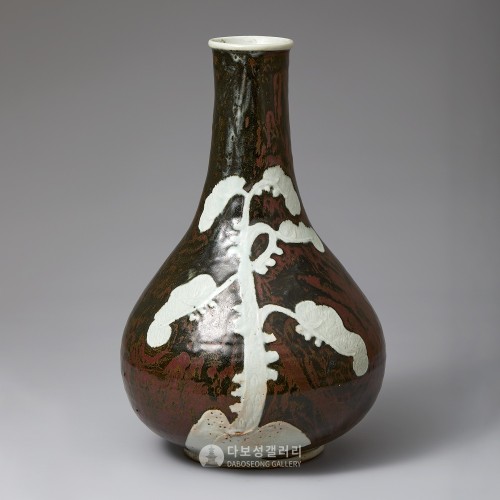
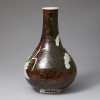
조선 후기에 제작된 백자 병입니다. 구연부는 도톰하게 밖으로 말려 있고, 몸체는 둥글게 부푼 구형(球形)에 낮은 굽을 갖추었습니다.
몸체에 소나무와 난초 문양을 양각으로 표현하였습니다. 소나무와 난초는 각각 절개와 장수, 고결함과 군자를 상징하는 소재로, 조선시대 문인 취향이 반영된 문양입니다. 『분원자기공소절목(分院磁器貢所節目)』「내출별번기명공가(內出別燔器皿貢價)」에는 궁중에서 사용된 양각백자가 청화백자나 순백자보다 높은 값으로 책정된 기록이 남아 있어, 당시 양각 백자의 높은 위상을 보여줍니다.
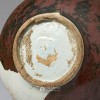
문양을 제외한 외면 전체에 철 안료를 입혔습니다. 요변(窯變) 현상이 일어나 자연스러운 요철과 색조 변화가 나타납니다. 검붉은 바탕과 백색 양각의 대비가 문양을 더욱 돋보이게 합니다. 굽 일부는 태토가 드러나며, 모래받침 흔적이 확인됩니다.
18~19세기 조선 후기에는 백자 제작이 다양하게 전개되었습니다. 이 유물은 양각 기법과 전면 철채 시문을 함께 사용하여, 미감이 강화된 조선 후기 백자의 제작 경향을 잘 보여주는 예로 사료됩니다.
━━━━━
此瓶制作于朝鲜后期。瓶口厚实并向外微微卷起,器身呈圆润饱满的球形,下承低圈足。
器身阳刻松树与兰草纹样。松树与兰草分别象征气节与长寿、高洁与君子品格,是体现朝鲜时代文人审美趣味的典型题材。朝鲜时期文献《分院磁器貢所節目》(內出別燔器皿貢價)中记载,宫廷所使用的阳刻白瓷,其定价高于青花白瓷与素白瓷,反映出当时阳刻白瓷的较高地位。
器物除纹样以外,剩余部分整体施铁颜料。烧造过程中产生窑变现象,呈现出自然形成的起伏肌理与色彩变化。红黑色底面与白色阳刻纹样形成鲜明对比,使纹饰更加突出。圈足部分露胎,可见垫砂烧造痕迹。
18至19世纪的朝鲜后期,白瓷制作呈现出多样化的发展趋势。此器物结合阳刻技法与通体铁绘,展现了朝鲜后期白瓷的制作更加倾向注重审美表现。
━━━━━
This is a white porcelain bottle crafted during the late Joseon dynasty. The rim is thickly rolled outward, and the body expands into a rounded, spherical shape resting on a low foot ring.
The body features pine and orchid motifs rendered in relief. Symbolizing integrity and longevity and nobility and the virtuous scholar, these motifs vividly reflect the aesthetic tastes of the Joseon literati. According to the Naechulbyeolbeongimeongongga (內出別燔器皿貢價) section of the Bunwonjagi Gongso Jeolmok (分院磁器貢所節目), white porcelain with relief carvings was priced higher than blue-and-white or plain white porcelain, demonstrating the prestigious status that relief-decorated porcelain held at the time.
Except for the motifs, the entire exterior surface is coated with iron pigment. Due to kiln transformation, natural irregularities in texture and subtle shifts in color tone have occurred. The striking contrast between the dark reddish-brown background and the white relief carving makes the decorative motifs stand out even more. Parts of the foot reveal the underlying clay body, with visible traces of sand supports used during firing.
During the late Joseon period of the 18th and 19th centuries, the production of white porcelain diversified significantly. This artifact serves as an excellent example of the evolving aesthetic trends of late Joseon white porcelain, showcasing a heightened sense of beauty through the combined use of the relief technique and overall iron glaze application.