본문
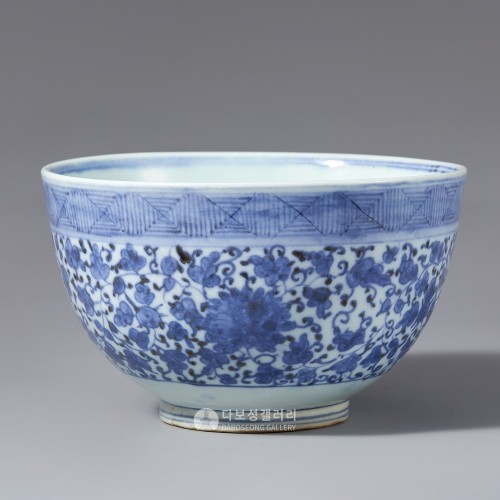
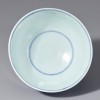
조선 후기 광주 분원(分院) 관요에서 제작된 것으로 추정되는 백자 발입니다. 넓은 구연과 풍만한 동체, 낮은 굽을 갖춘 형태입니다. 기벽의 두께가 일정하고 기형이 반듯합니다.
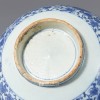
문양은 모두 청화 안료로 시문하였습니다. 동체 외면에는 주문양인 보상당초문(寶相唐草文)을 배치하였습니다. 귀하고 보배로운 꽃을 뜻하는 보상화는 연꽃과 모란 등을 조합한 상상 속의 꽃입니다. 덩굴과 어우러져 번영과 영원한 생명력, 장수를 상징합니다. 구연부와 굽 안밖에는 회문(回文)이나 띠를 두르는 등 종속문양을 시문하였습니다.
정제된 백토에 청백색 유약을 전면에 시유하였습니다. 굽 접지면은 유약을 닦아낸 뒤 모래를 받쳐 구운 흔적이 남아 있습니다.
정제된 태토, 청백색 유약, 밀도 있는 문양, 고른 시유 상태 등 조선 후기 분원 관요 백자의 특징이 드러납니다. 수급이 제한적이고 다루기 까다로운 코발트 안료를 전면에 정교하게 시문한 점은 당시 분원의 높은 제작 수준을 잘 보여주며, 왕실 및 상류층에서 사용된 내사(內賜) 유물로 추정됩니다.
━━━━━
此碗推测为朝鲜后期广州分院官窑所制。微撇口,深腹,矮圈足。器壁厚度均匀,器形端正规整。
通体施青花颜料。外壁饰缠枝宝相花纹,所谓宝相花,意指珍贵华美之花,是由莲花、牡丹等组合而成的想象之花。与藤蔓相结合,象征繁荣、永恒的生命力与长寿。口沿部及圈足内外则施以回纹或环带等装饰。
以精炼白土为胎,通体施以青白色釉。圈足与地面接触部分,留有去釉后垫砂烧造的痕迹。
器物胎土精炼,青白色釉,纹样密集细致,施釉均匀,体现出朝鲜后期分院官窑白瓷的特征。使用供应有限且技术难以掌控的钴料,在器物表面精细满绘,充分展示了当时分院高超的制作水平,推测为供王室及上级阶层使用的内赐器物。
━━━━━
This white porcelain bowl is presumed to have been produced at the Bunwon official kilns in Gwangju during the late Joseon Dynasty. It features a wide rim, a voluminous body, and a low foot. The thickness of the vessel walls is uniform, and the overall form is well-proportioned and stable.
All decorations are rendered in underglaze blue pigment. The primary design, a floral medallion and scroll motif, is positioned on the exterior of the body. The medallion flower, signifying a precious and noble flower, is an imaginary blossom created by combining elements of lotuses and peonies. Intertwined with scrolling vines, this motif symbolizes prosperity, eternal life, and longevity. Secondary designs, such as fret patterns and horizontal bands, are applied around the rim and both the interior and exterior of the foot.
A bluish-white glaze is applied over the refined white clay across the entire surface. Traces of sand-supported firing remain on the contact surface of the foot, where the glaze was wiped away prior to firing.
The artifact exhibits the quintessential characteristics of white porcelain from the late Joseon Bunwon official kilns, including refined clay, a bluish-white glaze, dense motifs, and an even application of glaze. The sophisticated and elaborate execution of the cobalt-blue pigment—which was limited in supply and difficult to handle—demonstrates the high level of craftsmanship at the Bunwon kilns during that period. It is presumed to be a Naesa artifact intended for use by the royal court or the upper-class literati.