작품 정보
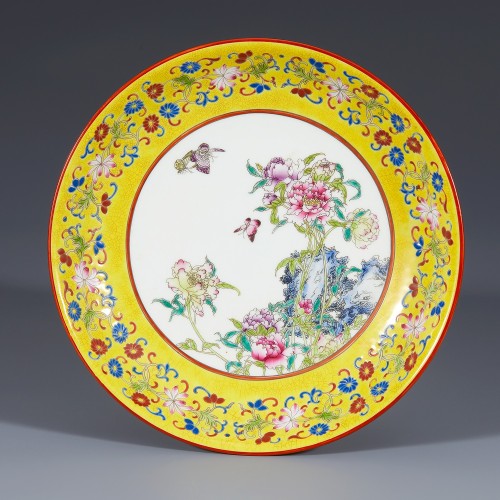
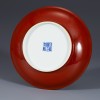
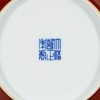
청나라 옹정 연간에 제작된 궁중 도자입니다. 황지(黃地) 바탕을 칠하고, 분채(粉彩)로 모란문(牡丹紋)을 화려하게 시문한 반입니다. 굽바닥에 ‘大清雍正年製(대청옹정년제)’ 관지가 있어 옹정제 시기에 제작되었음을 알 수 있습니다.
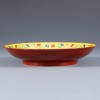
내면의 구연부에는 황색 바탕 위에 화훼당초문(花卉唐草紋)을 띠처럼 둘렀고, 청색·적색·녹색 등 다양한 색채를 사용하였습니다. 내저면 중앙에는 백색 바탕 위에 괴석과 모란, 나비를 시문하였습니다. 만개한 모란꽃이 풍성하게 채워져 있으며, 꽃잎과 잎맥이 세밀하게 묘사되어 있습니다. 외면은 문양 없이 적색 유약을 고르게 시유하였습니다.
문양은 분채 기법으로 시문되었습니다. 안료를 아교나 물에 풀어 여러 번 겹쳐 칠해 은은하고 입체적인 색감이 특징입니다. 윤곽선이 또렷하게 구분되면서 내부에서는 농담이 자연스럽게 이어집니다. 부드러운 색조와 채도가 높은 색이 병용되며 색 대비가 분명하게 나타납니다. 이러한 표현 방식은 옹정 연간 궁중 도자기의 특징입니다.
모란은 중국에서 부귀와 영광의 상징으로 여겨지며, 특히 여성적인 아름다움과 연결되어 황실 여성의 궁중 유물에 자주 등장합니다. 황색 바탕은 황제를 상징하는 색으로, 일반 백성이나 귀족조차 사용할 수 없었던 황실 전용 색이었습니다. 특히 황색과 다채로운 색채의 조화는 궁중 도자 중에서도 높은 수준에 해당합니다.
━━━━━
此为清朝雍正年间制作的宫廷瓷器。通体施黄色为底,并以粉彩描绘牡丹纹。底足署“大清雍正年製”款识,可知为雍正时期所制。
器物口沿内侧以黄色为底,其上带状环饰缠枝花卉纹,施蓝、红、绿等多种色彩。内底中央在白地上绘有怪石、牡丹与蝴蝶纹样。盛开的牡丹花铺陈饱满,花瓣与叶脉刻画细腻。器外壁无纹饰,通体均匀施以红色釉。
纹样采用粉彩技法绘制。颜料以胶或水调和,多次叠加施彩,呈现出柔和而富有立体感的色彩效果。轮廓线清晰分明,内部色调浓淡过渡自然。柔和色调与高饱和色并用,色彩对比鲜明。这种表现方式为雍正年间宫廷瓷器的典型特征。
牡丹在中国被视为富贵与荣耀的象征,尤与女性之美相关,常见于皇室女性所用的宫廷器物之中。黄色象征皇权,为皇帝专用之色,连贵族亦不得擅用。尤以黄色与多彩色调的结合,在宫廷瓷器中属上乘之作。
━━━━━
This is an imperial porcelain dish produced during the Yongzheng reign of the Qing dynasty. It has a yellow-ground surface and is richly decorated with peony motifs in famille rose. On the base appears the mark '大清雍正年製(Made in the Yongzheng reign of the Great Qing)', indicating that it was produced during the Yongzheng period.
On the inner rim, floral scroll motifs are arranged in a band over a yellow ground, using various colors such as blue, red, and green. At the center of the interior, a rock, peonies, and butterflies are depicted on a white ground. Fully blossomed peonies densely fill the composition, with petals and leaf veins rendered in fine detail. The exterior is evenly covered with a red glaze without decoration.
The motifs are executed using the famille rose technique. Pigments are applied in multiple layers, creating soft and dimensional color tones. The outlines are clearly defined, while tonal gradation flows naturally within them. Soft hues are combined with highly saturated colors, producing a clear contrast. This style is characteristic of Yongzheng-period imperial porcelain.
In China, peonies symbolize wealth and honor and are closely associated with feminine beauty, appearing frequently in objects for imperial women. The yellow ground represents the emperor and was reserved exclusively for the imperial court. The combination of yellow with rich polychrome decoration represents a particularly high level among imperial porcelains.
CONDITION
NOTICE
상담/문의 : 02- 730-5601 / 02- 730-7566