





본문
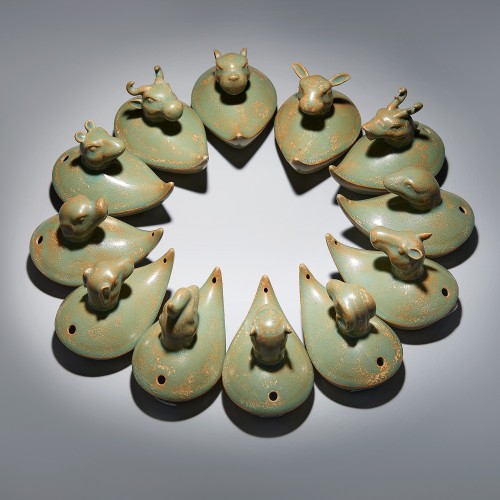
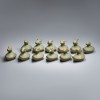
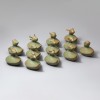
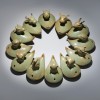
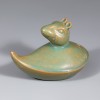
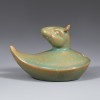
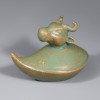
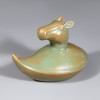
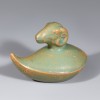
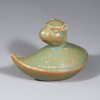
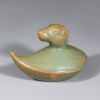
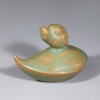
북송대 여요(汝窯)에서 제작된 십이지(十二支) 형상의 연적(硯滴) 열두 점입니다. 몸체는 물방울 형태이며, 상부는 각각 십이지 동물의 머리로 만들어졌습니다. 중국에서는 남북조 시대부터 벽사(辟邪) 용도로 십이지상을 만들어 부장(副葬)하기 시작하였고, 송대에는 자기(瓷器)로도 십이지상을 제작하였습니다. 이 연적들은 단정한 형태에 길상의 십이지를 사실적으로 묘사하여 각 동물의 특징이 잘 드러납니다.
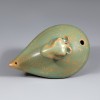
여요 특유의 은은한 비색 유약이 시유되어 표면은 잔잔한 광택을 띱니다. 부분적으로 미세한 빙렬과 유약층의 두께 변화가 나타나 자연스러운 질감을 보여줍니다. 유물 표면의 황갈색 갈변 흔적은 장기간 매장되어 생긴 것으로 보여 연적이 실사용되었는지와는 무관하게 부장품으로 추정됩니다. 굽 안쪽에는 규석을 받쳐 구운 흔적이 세 군데 있습니다.
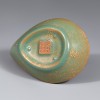
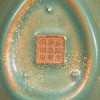
연적마다 바닥 면에는 '崇寧元年奉華殿御用(숭녕원년봉화전어용)'이라는 관지가 있습니다. 전서체의 관지는 정방형의 구획 안에 양각으로 새겨졌으며 유약이 시유되지 않았습니다. 숭녕(1102~1106)은 북송 휘종의 두 번째 연호로 숭녕 원년은 1102년이며, 봉화전은 궁정의 전각이나 기관의 명칭으로 추정됩니다. 관지의 의미는 이 유물들이 숭녕 원년(1102)에 봉화전에서 사용하기 위해 만든 황실용 연적이라는 의미로 보입니다.
这组器物为北宋时期汝窑烧制的十二生肖形砚滴,共十二件。砚滴主体作水滴状,上部则分别塑作十二生肖动物的首部。中国自南北朝时期起,便有制作十二生肖像以随葬辟邪的习俗;至宋代,亦开始以瓷器呈现十二生肖形象。此组砚滴形制端正,十二生肖刻画生动写实,各动物特征表现鲜明。
通体施以汝窑特有的淡雅天青釉,釉面柔和而富有微光。局部可见细密的开片及釉层厚薄的自然变化,呈现出温润的质感。器表略带黄褐色的土沁,应为长时期埋藏所致,由此推测其作为随葬明器,与实际使用的砚滴无关。器底内侧可见三处以石英支钉支烧的痕迹。
每件砚滴的底部均刻有“崇寧元年奉華殿御用”款识。此款以篆书阳文刻于方形界格之内,且不施釉,形制颇为少见。“崇宁”(1102–1106年)为宋徽宗的第二个年号,崇宁元年即1102年;“奉华殿”应为当时宫廷殿阁或相关机构的名称。由此可知,此组砚滴为崇宁元年(1102年)特为奉华殿所制的皇室用器。
This is a set of twelve zodiac-shaped water droppers produced at the Ru kilns during the Northern Song dynasty. Each piece has a droplet-shaped body, topped with the head of one of the twelve zodiac animals. In China, figures of the twelve zodiac animals began to be made as burial objects for apotropaic (evil-averting) purposes from the Southern and Northern Dynasties period, and by the Song dynasty they were also produced in porcelain. These water droppers, with their neat, compact forms, depict the auspicious zodiac animals in a realistic manner that clearly conveys the characteristics of each creature.
They are coated with the characteristically soft, bluish-green celadon glaze of Ru ware, giving the surface a gentle sheen. Fine crackles and variations in glaze thickness appear in places, creating a natural texture. The yellowish-brown discoloration visible on the surface seems to have formed during a long period of burial, suggesting that these works were grave goods rather than items used in daily life. On the inner side of each foot, there are three marks left by quartz spurs used to support the pieces during firing.
On the base of each water dropper is an official inscription reading “崇寧元年奉華殿御用” (“For Imperial Use in the Fenghua Hall, First Year of Chongning”). The seal-script mark is carved in low relief within a square cartouche and left unglazed. Chongning (1102–1106) was the second reign period of Emperor Huizong of the Northern Song, with the first year corresponding to 1102. “Fenghua Hall” is thought to be the name of a palace hall or court institution. The inscription indicates that these water droppers were made in 1102 as imperial utensils for use in the Fenghua Hall.